

Unprotect Excel sheets: This is how it works
Unprotect Excel sheets: This is how it works
It makes your hair stand on end: There you are, having painstakingly created a perfect spreadsheet in Excel at last. You send it to the team members or the boss – and they change a value here, move a cell there or even delete the important table completely. All the work was for nothing … To prevent this, individual or even all cells of such a worksheet can be locked and the entire sheet can be secured with a password. But what if you still have to work on it later? Then it makes sense to be able to unlock the Excel sheet. Here we show step by step how this works.
Unprotect Excel sheets with a few clicks
Actually, you can only unprotect Excel sheets if you know the corresponding password (exceptions to this below). If the sheet is protected with a password, it cannot be edited for the time being. In order to make this possible, five steps are sufficient to unprotect Excel sheets: 1. First open the protected file. 2. Then jump to the cash register „Check“ at the top. 3. Find the category „Changes“ and press the button „Unprotect sheets“. 4. Now the password must be entered in the corresponding prompt field. 5. Confirm with „OK“. To protect an Excel sheet with Microsoft Excel again, a new password is created via the button „Protect sheet“.
Microsoft Excel keeps a loophole open
Too bad if you have secured an Excel spreadsheet with a password as a precaution – and then forget exactly that! Do you then have to do all the work all over again and create a new Excel spreadsheet? No! Fortunately, with Microsoft Excel and an additional tool, you can remove the Excel sheet protection without using the password.
How to remove the Excel password
If you want to remove the Excel sheet protection without knowing the password, you first have to download the programme 7-Zip for free and install it on your PC. Once all this has been done, proceed as follows:
- Open the folder with the corresponding Excel file.
- Right-click on the file and open it with the command "7-Zip > Open".
- A folder with the name "xl" is shown, which must be opened.
- Select the term "worksheets" in this folder.
- Copy the file "sheet1.xml" that appears to the desktop.
- open "sheet1.xml" in a word processing programme, leaving the 7-Zip programme open.
- In Excel 2010, search for the term "password" using the "Search" command (key combination "Ctrl + F") (in Excel 2013 and Excel 2016, enter "sheetProtection" as the search term).
- In the Excel 2010 file, the entry with the password is now displayed in inverted commas.
- Delete the password (not the inverted commas!).
- The display must now show password="". (As of Excel 2013, the display must look like this "<sheetProtection>").
- Save the file "sheet1.xml".
- Next, copy the file m 7-Zip archive to the same place where it was before.
- Mark the pop-up option field with "Yes" and close the 7-Zip programme.
- Now open the file with Microsoft Excel.
- Now, as described above, the Excel sheet protection can be removed with a few clicks.
Does this work with the whole Excel file?
That would be too good – especially for people who would have unauthorised access to protected files. That’s why the steps only work if individual Excel sheets are protected with a password.
Help - the button "Unprotect sheets" cannot be activated!
If the button „Unprotect sheets“ is greyed out and cannot be clicked, the document probably has a release protection. In order to be able to edit the document, this must first be removed.
- First click on Check > Unprotect.
- Then release the Excel spreadsheet with Check > Release Workbook.
- In the window that now appears, click on "Allow multiple users to edit at the same time". This also enables you to merge workbooks.
- In the next window, simply confirm with "Yes".

Unprotect Excel sheets: This is how it works
Unprotect Excel sheets: This is how it works
It makes your hair stand on end: There you are, having painstakingly created a perfect spreadsheet in Excel at last. You send it to the team members or the boss – and they change a value here, move a cell there or even delete the important table completely. All the work was for nothing … To prevent this, individual or even all cells of such a worksheet can be locked and the entire sheet can be secured with a password. But what if you still have to work on it later? Then it makes sense to be able to unlock the Excel sheet. Here we show step by step how this works.
Unprotect Excel sheets with a few clicks
Actually, you can only unprotect Excel sheets if you know the corresponding password (exceptions to this below). If the sheet is protected with a password, it cannot be edited for the time being. In order to make this possible, five steps are sufficient to unprotect Excel sheets: 1. First open the protected file. 2. Then jump to the cash register „Check“ at the top. 3. Find the category „Changes“ and press the button „Unprotect sheets“. 4. Now the password must be entered in the corresponding prompt field. 5. Confirm with „OK“. To protect an Excel sheet with Microsoft Excel again, a new password is created via the button „Protect sheet“.
Microsoft Excel keeps a loophole open
Too bad if you have secured an Excel spreadsheet with a password as a precaution – and then forget exactly that! Do you then have to do all the work all over again and create a new Excel spreadsheet? No! Fortunately, with Microsoft Excel and an additional tool, you can remove the Excel sheet protection without using the password.
How to remove the Excel password
If you want to remove the Excel sheet protection without knowing the password, you first have to download the programme 7-Zip for free and install it on your PC. Once all this has been done, proceed as follows:
- Open the folder with the corresponding Excel file.
- Right-click on the file and open it with the command "7-Zip > Open".
- A folder with the name "xl" is shown, which must be opened.
- Select the term "worksheets" in this folder.
- Copy the file "sheet1.xml" that appears to the desktop.
- open "sheet1.xml" in a word processing programme, leaving the 7-Zip programme open.
- In Excel 2010, search for the term "password" using the "Search" command (key combination "Ctrl + F") (in Excel 2013 and Excel 2016, enter "sheetProtection" as the search term).
- In the Excel 2010 file, the entry with the password is now displayed in inverted commas.
- Delete the password (not the inverted commas!).
- The display must now show password="". (As of Excel 2013, the display must look like this "<sheetProtection>").
- Save the file "sheet1.xml".
- Next, copy the file m 7-Zip archive to the same place where it was before.
- Mark the pop-up option field with "Yes" and close the 7-Zip programme.
- Now open the file with Microsoft Excel.
- Now, as described above, the Excel sheet protection can be removed with a few clicks.
Does this work with the whole Excel file?
That would be too good – especially for people who would have unauthorised access to protected files. That’s why the steps only work if individual Excel sheets are protected with a password.
Help - the button "Unprotect sheets" cannot be activated!
If the button „Unprotect sheets“ is greyed out and cannot be clicked, the document probably has a release protection. In order to be able to edit the document, this must first be removed.
- First click on Check > Unprotect.
- Then release the Excel spreadsheet with Check > Release Workbook.
- In the window that now appears, click on "Allow multiple users to edit at the same time". This also enables you to merge workbooks.
- In the next window, simply confirm with "Yes".

Important information about Windows 11
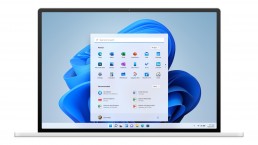
A new Windows experience that brings you closer to the people and things that matter to you.
Release
Microsoft Windows 11 will be the successor to Windows 10 and was announced by Microsoft product manager Panos Panay on 24 June 2021. According to the June 2021 announcement, the new operating system will be released at the end of 2021 What is the difference between Windows 10 and Windows 11? Windows 11 offers all the power and security of Windows 10 with a redesigned and updated look. It also includes new tools, sounds and apps. Every detail is taken care of. It all adds up to a refreshing experience on your PC. When can I buy a PC with Windows 11 pre-installed? PCs with Windows 11 pre-installed will be available later this year. How much does a PC with Windows 11 cost? It depends. Many different manufacturing companies will offer a variety of devices running Windows 11, all at different price points. Where can I buy a PC with Windows 11? PCs pre-installed with Windows 11 will be available from a variety of retailers later this year. Details will follow.
Will my accessories work with Windows 11? If your accessory runs on Windows 10 and meets Windows 11 requirements, it should run on Windows 11. If you want to be sure, please contact the manufacturer of your accessory. I want to buy a PC now. Can I install Windows 11 later? Most Windows 10 PCs currently sold can be upgraded to Windows 11. In order for the PC to be upgraded to Windows 11, it must meet the minimum hardware requirements and some features require specialised hardware. The timeline for the rollout of the update is being finalised and is expected to begin in late 2021 and continue through 2022. The specific time frame varies depending on the device. How do I know if a new Windows 10 PC meets the minimum requirements? There are a few ways to find out. If you’re in the process of buying a new PC, look for the „Free Upgrade to Windows 11“ notice on the fact label. You can also ask your dealer for confirmation. When can I upgrade to Windows 11 on my Windows 10 device? If your existing Windows 10 PC is running the latest version of Windows 10 and meets the minimum hardware requirements, you can upgrade to Windows 11. The release schedule for the upgrade is still being determined, but for most devices already in use today, it is expected to be ready in early 2022. Not all Windows 10 PCs that are eligible for an upgrade to Windows 11 can be upgraded at the same time. To determine if your PC is eligible for an upgrade, download and run the PC Integrity Check app. Once the update rollout has started, you can check if the update is ready for your device under Settings > Windows Update. What if my PC does not meet the minimum hardware specifications? Can I stay with Windows 10? Yes. Windows 10 continues to be a great version of Windows. We are committed to supporting Windows 10 until 14 October 2025.
How do I know when the upgrade is available for my Windows 10 PC? Updates for Windows 11 will begin in late 2021 and continue through 2022. During this time, we will be doing some behind-the-scenes testing and validation for your specific PC. Windows Update will indicate if and when your PC is eligible. You can check this by going to „Settings“ > „Windows Update“. How much does it cost to upgrade from Windows 10 to Windows 11? It is free of charge. However, only Windows 10 PCs that are running the latest version of Windows 10 and meet the minimum hardware requirements can be updated. You can check whether you have the latest updates for Windows 10 under „Settings“ > „Windows Update“. What is the difference between upgrade and update? An update can consist of bug fixes, security fixes and new features in a version of Windows. Updates are usually made during the course of the year. An upgrade takes place when you change versions, for example from Windows 10 to Windows 11 or editions from Windows Home to Windows Pro. How long is the free upgrade available? The free upgrade offer has no specific end date for eligible systems. However, Microsoft reserves the right to end support for the free offer. This end date will be no earlier than one year after general availability. Can I continue to use Windows 10? Yes. There is no need to upgrade to Windows 11. We will continue to support Windows 10 until 14 October 2025.
Does Windows 11 take up more space on my PC than Windows 10? Windows 11 and Windows 10 require approximately the same amount of storage space. However, additional storage space is required during the upgrade process. Windows deletes this extra space about 10 days after the upgrade is complete. Is Windows 11 a replacement for Windows 10? Windows 11 is the latest version of Windows. However, we will continue to support Windows 10 until October 2025. What happens to my files when I upgrade to Windows 11? By default, all your files and data will be transferred. However, we recommend that you make a backup copy of your files before installation. Can I go back to Windows 10 after the upgrade if I don’t like Windows 11? Yes. After installing the Windows 11 update, there is a 10-day period during which you can revert back to Windows 10, keeping the files and data you brought with you. At the end of the 10 days, you will need to back up your data and perform a „reinstall“ to return to Windows 10. How long does it take to install Windows 11? Downloading and installing Windows 11 will most likely take longer than a typical Windows 10 feature update. You can use your PC while downloading Windows 11 and then have the option to schedule the installation to take place at a time when you do not want to use your PC. Can I upgrade my Windows 10 PC to Windows 11 when I run S Mode? If your PC meets the minimum hardware specifications, Windows 10 Home Edition in S mode can be upgraded to Windows 11 Home Edition in S mode. If your Windows 10 PC is running Pro Edition in S mode, you must exit S mode to upgrade to Windows 11 Pro. Windows 11 Pro Edition is not available in S mode. Can a really old PC run Windows 11? You can use the PC Integrity Check application to determine if your machine is ready to upgrade to Windows 11. Many PCs that are less than four years old can be upgraded to Windows 11. They must be running the latest version of Windows 10 and meet the minimum hardware requirements.
Important note
Windows 10 and Windows 11 will continue to run in parallel. Windows 10 will be supported until October 2025. This is probably also because Windows 11 increases the hardware requirements. If your system is not suitable for Windows 11, you still have a few years. Even if you don’t like the look of Windows 11, you can just stick with Windows 10. It’s still unclear whether Microsoft will continue to release two feature updates a year for Windows 10. Either way, Windows 10 21H2 should be available in autumn, and of course there will be a security update every day.
PDF Password: How to remove it
PDF Password: How to remove it
Some PDFs are already protected with a password by the sender. If you don’t know it, you can’t read the document. But every now and then you also want to protect sensitive documents that you send in PDF format with a password so that they are safe from unauthorised access. Good PDF Converter make this step easy. But how can you remove the PDF password once it has been set? We show it step by step.
How to remove the PDF password in Windows
Naturally, a file that is password-protected can only be opened if the password is known. And only then can the protection be removed, for example to print the document or make changes to it.
This is how it works:
- Open PDF file
- Enter password
- Click on the "Print" option and select "Print to PDF"
- Windows 10 offers the option directly with the command "Microsoft Print to PDF"
- Confirm
- Select the destination folder for the file
- "Click "Save
This will automatically create a copy of the file that you can save without password protection.
The steps for Mac users
Via the browser, removing the PDF password also works with the „Print to PDF“ command, just like on Windows computers:
- Open PDF
- Enter password
- "Select "Print
- Select "Save as PDF" from the drop-down menu in the bottom left-hand corner
- Select destination
- Confirm
An even easier alternative is to open the encrypted PDF with „Preview“. After entering the password, select „File“ in the menu bar, then click on „Export as PDF“ in the submenu. Search for a storage location, confirm – done!

Can the PDF password also be removed on the smartphone?
Of course, mobile phones also offer possibilities in this respect. However, a distinction must be made between Android and iOS (iPhone):
Android
- First you have to install an appropriate app such as Google PDF Viewer or PDF Utilities
- Enter the PDF and decrypt it using the password.
- Then create an unencrypted copy with "Print to PDF" as described above.
iOS:
- Open PDF
- Select the "Share" icon
- Tap the "Print" function
- In the print preview, tap the "Share" icon again
- Select the target volume for the copy
- Confirm
Use PDF software
In order to be able to create a PDF at all, you first need a PDF converter. With such PDF software, you can not only add a PDF password to documents, but also easily remove it again Adobe Acrobat 2020 is at the top of the class here, allowing MIP-protected files to be opened under Windows and Mac. After the security systems AIP (Azure Information Protection) and Information Protection for Office 365, MIP (Microsoft Information Protection) is considered absolutely secure protection for sensitive documents and data in PDF format Adobe Acrobat 2020 (like Acrobat Reader 2020) automatically detects if a file is an MIP-protected file. Users are then automatically prompted to download and install a plug-in from the Adobe help page. This then allows corresponding files that are protected with a PDF password to be opened without any problems.
For Adobe Acrobat DC users
Many users also use the PDF software Adobe Acrobat DC. With this, it is possible to remove the PDF password in just three steps:
- Open PDF file
- In the security settings select "Tools", then in the submenu select "Protect", "More options" and "Remove security settings".
- Depending on the type of protection, you can now remove the password with a simple click on "OK". Or a prompt appears to enter the password, which one must confirm twice with "OK".
Online tools for removing the PDF password
Those who do not want to or cannot carry out the steps described above also have the option of reading and editing password-protected documents online Online PDF softwares such as PDF24 or PDFCreator allow you to copy the protected document to the website. Then all that needs to be done is to enter the password, and seconds later a copy of the document is created without password protection.
Header Image: © Hengki, stock.adobe.com

Kaspersky virus protection: How to enter the activation code
Kaspersky virus protection: How to enter the activation code
The horror scenario for every computer user: unsuspectingly, you switch on your PC in the morning and – nothing happens! Or – even worse – a message appears saying that the computer has been hacked and that you can only get your data back by paying a ransom. These are only two of the countless possibilities that Trojan viruses and other malware can trigger. Kaspersky virus protection, which surrounds the computer like the walls of a medieval castle, can help.
What is Kaspersky virus protection?
Basically, every computer has weak points through which hackers can infiltrate their viruses. Simply being connected to the Internet can prove to be a weak point without sufficient protection. But even malware that is either loaded via the network or fed onto the hard disk via data carriers can destroy all data at once or render parts of the computer unusable. It is therefore urgently necessary for every PC user to install up-to-date software for the Virus protection installed. Kaspersky virus protection has proven to be the leading programme in this area. The software successfully fends off attacks by viruses, malware and Internet dangers such as dangerous websites and phishing attempts.
This is what the software contains:
- Virus Protection: In addition to a virus scanner, the programme also offers real-time protection that detects and removes viruses and Trojans before they can penetrate the computer's system.
- Firewall: The firewall included in the version Kaspersky Total Security 2021 version analyses data traffic and protects IT systems securely against attacks or unauthorised access
- VPN: Kaspersky Total Security 2021 also includes a VPN that allows you to surf the internet anonymously, for example for protection when using an unsecured network.
- Special features: The virus protection programme from Kaspersky also scores with extras such as parental control, vulnerability scanner, spam filter, update assistant, game mode, filter for search results, protection for online banking, password manager and a filter for advertising.

Kaspersky virus protection requires an activation code
To be able to use Kaspersky’s virus protection, you must first enter a 20-digit activation code. Two methods are available for this:
Enter activation code during installation
- The first thing to do is to check that your PC has the correct date. Only then should you enter the code in the window that opens during the installation.
- After entering the code in the corresponding fields, click on the button "Activate".
- If a message appears stating that the software has been successfully activated, click the "Finish" button.
- The Kaspersky Anti-Virus Licensing window appears. Details on the activation of the software are displayed here, which you can follow step by step.
Activation after installation
- The first step is to open the Kaspersky Anti-Virus application.
- Then select the option "Enter activation code" in the lower right area.
- The window "Licence management" appears, here you must select the item "Activate programme".
- The Kaspersky Anti-Virus activation window opens. To activate, proceed as described above.

Avast Premium Security 2020
The second antivirus software we want to introduce today is Avast Premium Security 2020. The paid version contains all the features you might already be used to from the free version, plus those of Avast Internet Security. This includes:
- Antispam filter: It detects unwanted emails and denies them access to the mail program.
- Firewall: With this software, protection can be controlled directly from the user interface.
- Automatic programme updater: which always uses the latest version.
- Real-time protection: With it, one can monitor all activities of the computer such as running programmes and files in real time.
- FileRep and WebRep: These features check files and websites against databases. If something is not trustworthy, the software informs you immediately.
- Virus Container: This is an isolated area on the hard drive where suspicious or dangerous files are kept safe.
Header Image: © Shinonome Production, stock.adobe.com

EaseUs Todo Backup: How to back up your files
EaseUs Todo Backup: How to back up your files
Suddenly the desktop goes dark, the PC won’t boot up. Or you overwrite an important document and don’t rename it. Or a virus eats through the most important data and destroys it. Or … the possibilities of losing important files are manifold. How are you supposed to restore them if no regular data backup was made beforehand? Often this does not work at all – and this can have fatal consequences. The good advice: regularly make a data backup with a backup on your PC or, even better, with top software such as EaseUs Todo Backup make.
This is why data gets lost
Starting with the Windows 7 operating system, the computer automatically creates a data backup on a regular basis, thus acting almost like a kind of automatic backup. Nevertheless, it can quickly happen that important files are lost The most common reasons for this are:
- Technical problems: Older hard disk drives (HDD) in particular wear out over time. The danger is less acute with modern SSD hard drives, but data can still be lost. For example, due to demagnetisation or sudden power interruption. According to the manufacturer, hard disks generally have a maximum lifespan of 10 years. Without regular data backups, it is difficult to restore sensitive files afterwards. Suitable data backup software such as EaseUs Todo Backup is therefore essential.
- Human error: Shocks, for example if the laptop or external hard drive is dropped, but also liquids that penetrate the inside of the computer - such as a spilled coffee - quickly lead to data loss. It is not uncommon for files to be accidentally deleted, overwritten and incorrectly formatted. Another source of error is the accidental download of malware such as viruses or ransomware.
- Force majeure: No one is protected from unforeseeable events such as water damage, fire or earthquakes. The risk of suffering a data loss as a result can be reduced by regular backups and a data backup using the cloud or EaseUs Todo Backup.
- Theft: In fact, it is not at all uncommon, especially in professional life, for hackers to steal data. A good firewall, careful handling of files and regular data backups help to prevent this.

Backing up files with Backup PC and EaseUs Todo Backup
Computers running the Windows 7 operating system or higher automatically create a backup as a backup PC Another option is to regularly back up files by using a special Backup PC computer is used like a kind of external hard disk. All „work computers“ are then connected to this computer and the data backup takes place automatically.
EaseUs Todo Backup instructions
Regular data backup is much easier and more convenient with EaseUs Todo Backup.
This is how to proceed
- First, Todo Backup is downloaded as an installation file from the manufacturer's website.
- Then you select the hard drive you want to back up.
- You can choose the default function "hard disk" or select a storage location that is not directly on the PC, such as a USB stick or an external hard disk. Alternatively, a cloud storage can be specified as the storage location.
- When the programme is started, EaseUs Todo Backup offers the following options:
- Drive/Partition Backup
- File backup
- System backup
- Smart backup
- Clonesn
- System Clone
- If you want to create a simple backup copy of the Windows operating system with all its files, just click on "System backup". The software then automatically selects the correct partition.
- "Smart-Backup", on the other hand, regularly backs up the data that has been changed and newly added at predefined times. For example, always on Fridays after work at 6 pm.
- A time when the PC is not in use is ideal for the backup, as the process can take some time. Depending on the selection made beforehand, the PC either shuts down after the backup or switches to energy-saving mode.
- It is advisable to make another selection beforehand. Depending on what is required, the functions "full backup", "incremental" and "differential backup " are available.
Header image: © jirsak, stock.adobe.com

Word 2019: Inserting and removing a watermark
Word 2019: Inserting and removing a watermark
When we talk about watermarks in Word 2019 watermarks, we don’t mean the shimmer-through images like on bank notes, the copyright notice on images from the internet or certificates. Rather, we are talking about a text, graphic or other element that is visibly located behind the continuous text of a document. This is used, for example, to indicate statuses such as „urgent“, „copy“ or „draft“ in the document. In Word 2019, a watermark can also be a personal signature or simply an additional stylistic device. We explain how to insert such a watermark and, if necessary, how to remove it again here.
Inserting a watermark in Word 2019
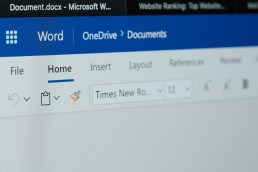
Inserting a watermark in Word 2019 or even Word 2016 is quite simple. Once the relevant Word document that is to receive a signature or status indication is open, the first step is to click on the „Draft“ tab in the menu.
Word 2019
In the „Page background“ area on the far right, select the „Watermark“ field .
Word 2016
Here you can click directly on the item „Watermark“ in the bar that appears on the left. Then proceed in the same way for both versions.
After the click, both Word 2019 and Word 2016 already have several watermarks to choose from. If the right one is already there, simply click on it and it will appear in the background on every page of the document. If you want to insert your own personal watermark in Word 2019 or Word 2016 click on the tab „User-defined watermark…“. The dialogue window „Printed watermark“ opens, in which the option „Text watermark“ must be selected. In the text input field „Example“ you can now enter your own text for the watermark. Below this are some layout options such as font, size, colour and layout (diagonal/horizontal) with which you can further individualise the watermark.
How to remove the watermark in Word 2019
But it may also be that the watermark document has become unnecessary. For example, if the document is no longer a draft. Or you want to send a text without your own watermark in the background. Then it makes sense to be able to remove the watermark again.
To do this, proceed as follows:
- First open the corresponding document again
- Select the "Draft" tab.
- In the "Page background" area, click on "Watermark" again.
- Select "Remove watermark" in the lower area.
Tip: Sometimes it can happen that the watermark can still be seen in whole or in part on the document. It may then be part of the header. In this case, simply double-click on the top of the document and then follow the steps above.

Watermark still visible on Word 2019 document?
Then the element in question is probably a partially transparent background graphic. And it was obviously not inserted via the watermark function as described above. In this case, you can try to remove the graphic by right-clicking on the corresponding document. Now select „Format graphic“ in the window, then right-click „Delete“ again.
Is this also possible with images?
Sure, images can also be installed as watermarks in the background of a text.
- To do this, first click the "Draft" tab as before and then the "Watermark" button. Then select the tab "Custom watermark..." this time.
- The dialogue window "Printed watermark" opens. In this case, activate the option "Image watermark". The button "Select image..." appears directly below.
- Click on it and the window "Insert images" opens. Now select the button "Browse" under the option "From a file". Now a picture or graphic can be selected from the hard disk of the PC, which is simply clicked on and then activated with the command "Insert" and "OK".
Tip: In the „Printed Watermark“ dialogue box under the „Image Watermark“ option, you can use the „Scale“ and „Wash Out“ functions to make the image larger or smaller and to make it more or less contrasty.
Header image: © Web Buttons Inc, stock.adobe.com

Windows 10 Quick Start: How to activate and deactivate it
Windows 10 Quick Start: How to activate and deactivate it
Sometimes it takes a small eternity until the computer is finally booted up. This is especially annoying when, for example, you have a customer on the phone and need urgent information, but it is saved on the computer. Then the duration of the slow start-up becomes a real test of patience. A remedy for this is the quick start, which allows Windows 10 to start up and shut down significantly faster. Normally it only takes a few seconds. Practical, isn’t it? And yet there can be good reasons to deactivate Windows 10 Quick Start. We explain what they are here.
This is what happens with Windows 10 Quick Start
When starting the computer under Windows 10 Home or Windows 10 Pro basically three system operations take place:
- Preboot, i.e. the authentication of the system
- Initialisation of the system and the driver
- Session Init, which refers to the actual starting of the session.
Once all this is done, the PC can accept the user’s login Windows 10 Quick Start basically just optimises the initialisation process. The slow start-up with seemingly endless duration can be avoided if the computer is also shut down in this mode beforehand. The entire system is then in a kind of sleep mode. That is, it is not shut down completely, only the programmes are closed and the users logged off The most important system files for initialisation, which the PC needs immediately at start-up, are stored in a buffer called „hiberfil.sys“ – and are immediately ready for use again at the next start.

Why should you deactivate Windows 10 Quick Start?
In Windows 10 Home and Windows 10 Pro, the Quick Start feature is already enabled as a default. Nevertheless, there are situations in which it is better not to use the function:
- When working with two operating systems on one computer, problems can arise especially with older versions of Windows (especially Windows 7!) and with Linux
- If you use an SSD hard diskif you use an SSD hard disk, its service life is shortened by the permanent additional write operations
- When working in a Network policies cannot be executed if they have "On start-up" as a condition.
- Included Software Distribution and Patch Management contain the "On restart" rule, they will not work with the Quick Start feature.
To disable Windows 10 Quick Start
If there is one of the previously mentioned problems with the PC, it is high time to deactivate the pre-installed Windows 10 Quick Start. Here’s how to do it:
- First open the Control Panel under Windows 10.
- In the category "System and Security then click on "Power Options.
- Now in the selection window select the option "Select what should happen when the power switch is pressed" select.
- Among other things, the following link appears "Some settings are not available at the moment"which must be clicked on.
- This is followed by a Security questionwhich you must answer with "Yes".
- Now scroll down and uncheck the option "Activate quick start (recommended)" uncheck it
- As a last step, confirm the new settings under "Save changes".
Tip:
If you want to reactivate Windows 10 Quick Start, you have to follow the same steps again. However, under „Activate quick start (recommended)“, set the corresponding check mark.

Everything only works when the hibernation function is activated
Windows 10 Quick Start is based on Hibernation Mode. This means that the PC is disconnected from the power supply in hibernation mode. However, if the hibernation function is already switched off – for whatever reason – deactivating Windows 10 Quick Start will not work. The options mentioned above are then not visible If this is the case, the only thing that helps is to reactivate the default setting of the hibernation function.
- To do this, press the Windows key and X at the same time so that the command line appears
- Here you have to start the admin prompt
- The DOS window opens by entering the command powercfg /hibernate on command.
Header image: © 1STunningART, stock.adobe.com

Virtual Private Network (VPN): For whom and when is it useful?
Virtual Private Network (VPN): For whom and when is it useful?
Lately, one keeps stumbling across the abbreviation VPN – „Virtual Private Network“. What sounds mysterious at first has a very practical use for many. It allows you to surf the Internet with a secure connection between your PC and the network. What exactly the Virtual Private Network is, what it can do and who should use it and where, we explain here.
This is the Virtual Private Network
Computers network securely over the Internet with VPN. This is particularly practical in times of home offices. For example, with the Virtual Private Network home PC can be connected to the employer’s network without it being apparent from the outside that it is a private computer. This is because the PC in the home office receives the company’s IP address with the VPN connection. With the corresponding access data and a VPN client software such as Avast SecureLine or Hide My Ass Pro VPN you can then use all the applications that you also need in the office for your daily work.
But the Virtual Private Network can do even more!
It also allows anonymous web browsing. The encrypted IP address means that third parties, such as Google, Facebook, hackers or even the police, have no way of tracking the user’s movements on the net.

Why is a VPN useful?
The Virtual Private Network primarily protects the user’s privacy. Because every time you surf without encryption, „Big Brother“ companies can track every click and use it for their own purposes. For example, for personalised advertising, but also for blackmail attempts by hackers! At the same time, the VPN also enables the use of content that is partially or completely blocked in certain countries.
That's why it's worth getting the right software if:
- You want to hide from hacker attacks and protect your privacy.
- You often surf in public WLANs, because personal data is also transmitted unencrypted here
- You are about to travel to a country that blocks access to some providers and platforms such as Google, Netflix, WhatsApp, Facebook or Instagram. These include, for example, China, Cuba, Thailand, Iran and North Korea.
- People use more or less semi-legal streaming services despite all the warnings
Are there any disadvantages to using a VPN?
Even though the advantages outweigh the disadvantages, there are some downsides. These include:
- The slowed internet speed, because the connection has to take a diversion via the network's server.
- The fact that the providers can usually see the network behaviour of the users.
- The fact that neither absolute anonymity on the internet nor one hundred percent protection against data misuse can be guaranteed.

Two top clients to buy: Avast SecureLine and Hide My Ass Pro VPN
For a VPN client software, the range of functions is of decisive importance on the one hand, and the handling on the other. In any case, it is recommended that you download the client of your choice onto your PC, tablet or smartphone before travelling to a country with restricted internet access. In the country itself, it is often difficult to access a virtual private network.
Two clients that have proven themselves in practice are:
Avast SecureLine
The software convinces with useful basic functions and a solid comfort for numerous supported systems. The intuitive operation is simple, the security structure absolutely sufficient. The client can be used on several devices per licence. The speed for page loading is satisfactory, there is secure WLAN protection, P2P/Torrent support, and a special server is available for streaming services.
Hide My Ass Pro VPN
With its server locations distributed all over the world – a total of 190 countries are in the programme – the client probably has the largest reach. At the same time, the handling is entirely in German, and the apps and applications are very well suited for Android, Apple iOS, Windows and macOS. In addition, it is also possible to use the client with VPN routers.
Header image: © jirsak, stock.adobe.com
Working with a PDF document: Tips & Tricks
Working with a PDF document: Tips & Tricks
PDF documents are super convenient. On the one hand, they offer an exact preview of a document, but on the other hand, the format is one of the most important tools for office work. Designing with text and images, presentations, corrections, exchanging documents, sending, saving – all no problem with PDF! How to work effectively with PDF files is described in the following article.
How to create PDFs
To create a PDF document, there are various programmes – some of which you have to pay for, some of which you can download for free If you work with a tool such as Nuance Power PDF Standard or Adobe Acrobat Standard 2017you usually proceed as follows:
- select the appropriate programme
- then drag the document to be converted into a PDF format to the appropriate place in the tool and save it
- most tools now offer the possibility to edit the file. Then click on "Next
- now you can name the PDF and save it to the desired location.
Microsoft Office users have it even easier:
- from the finished document, click on the "File" tab
- select the function "Save as" and determine the storage location
- Enter a file name and select PDF under "File type".
Convert a PDF document to another format
Converting a PDF file into another format is also quite simple. To do this, first open the PDF document with the appropriate programme. In the next step, select the file format into which the PDF file is to be exported (for example (.docx, .jpeg, .png, .tiff) Now click on „Export“, select the storage location and enter the file name. Save the new document with „Return“ (Enter).
Save a web page as a PDF file
If, for example, you want to save an interesting, extensive web page on your desktop to read it later at your leisure, this function is suitable Windows users press the key combination „Ctrl + P“. This calls up the print mode in which one selects the option „PDF“. Mac users press the combination „cmd + P“. Now select the function „Save as PDF“ in the selection field for the printer and choose a storage location.
Edit texts in the PDF document
Most PDF converters allow you to add new content. However, special PDF editors are needed to edit and change existing content.
Compress files that are too large
Some PDF files are too large to send as an attachment to an e-mail, for example. Then it’s time to reduce the size! Offline, this can be done with the appropriate PDF editors or tools. There are also some websites online where you can simply upload the relevant document and then download a compressed version of it.
Mac users have it particularly easy when compressing PDF documents:
- Open PDF with the "Preview
- under "File" select the function "Export
- select "Quartz Filter" in the pop-up menu, then click on "Reduce File Size", save.

Sign PDF document
Some PDF documents need to be completed and signed and returned. To do this, it is not necessary to first print out these documents and then scan them back in. In Acrobat Reader and other PDF editors, for example, the function „Fill in and sign“ can be selected. This allows PDFs to be filled out on the screen and provided with a personal digital signature (via touch screen or image).
A software comparison: 2 top PDF tools
Nuance Power PDF Standard
This allows you to create PDF documents, such as a presentation, in no time at all , change, edit them and add a digital signature. For about 60 euros, the programme does everything you would expect from a good PDF editor. The licence for the tool requires online activation, which, however, cannot be transferred to a new PC.
Adobe Acrobat Standard 2017
This programme allows you to edit text, images and bulleted lists directly in the PDF. The text flow is automatically adjusted on the entire page. PDFs can be easily exported for Microsoft Word, Excel or PowerPoint, leaving the formatting of, for example, bulleted lists or tables intact.
Header image: © monticellllo, stock.adobe.com